Osteoporosis is a common condition in which bones weaken and become prone to fracture. It often progresses silently; the first sign may be a fracture after a simple fall. This is why it is important to assess bone health in advance in people at risk. Bone densitometry (DXA) measures bone mineral density and is the accepted standard method for diagnosing osteoporosis. In this guide we look at what DXA measures, how the results are interpreted and who it is recommended for.
What is bone densitometry (DXA)?
DXA stands for “Dual-energy X-ray Absorptiometry” and is sometimes written as DEXA. The method uses X-rays at two different energy levels to measure the amount of mineral in the bones.
The radiation dose used in DXA is very low. The examination is quick, painless and non-invasive. Rather than producing a detailed picture of the bones, the measurement focuses on determining bone density numerically.
Which areas does DXA measure?
Bone density is usually measured at two sites:
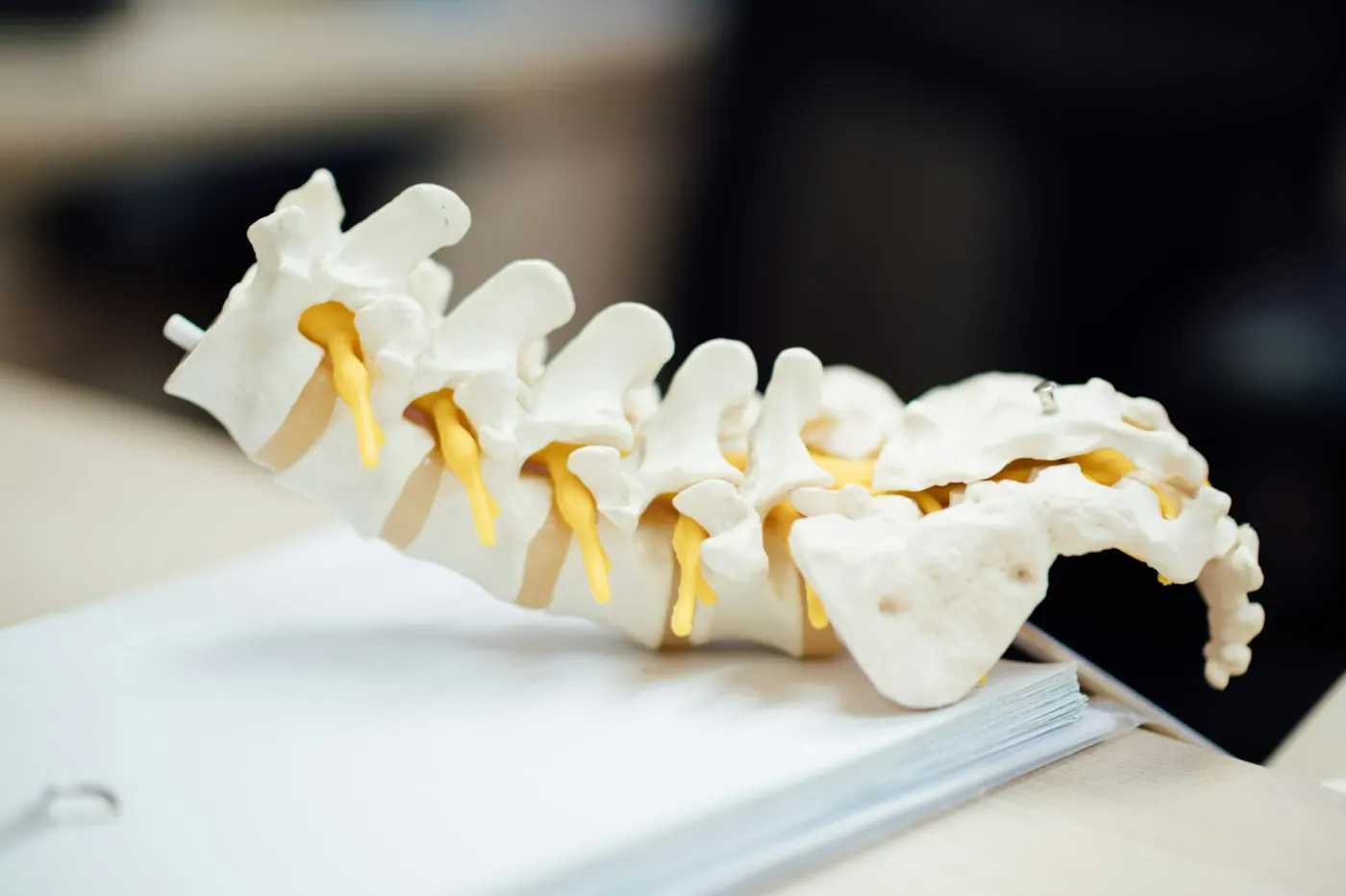
- Lumbar spine: Usually the first to fourth lumbar vertebrae are assessed.
- Hip (proximal femur): The upper part of the thigh bone, and in particular the femoral neck, is measured.
These sites are where fractures related to osteoporosis commonly occur and are clinically important. In some situations where a reliable measurement cannot be obtained from the spine or hip (for example because of a prosthesis or advanced degenerative change), a forearm measurement may also be used.
What do the T-score and Z-score mean?
The most prominent values in a DXA report are the T-score and the Z-score.
T-score
The T-score compares the measured bone density with the average value of healthy young adults. According to the World Health Organization definition, the following classification is used, particularly in post-menopausal women and men over 50:
- T-score of −1.0 or above: Normal bone density
- T-score between −1.0 and −2.5: Osteopenia (low bone mass)
- T-score of −2.5 or below: Osteoporosis
Z-score
The Z-score compares the measured value with the average for people of the same age and sex. The Z-score is more meaningful in pre-menopausal women, men under 50 and children. A Z-score markedly lower than expected may indicate that another condition causing bone loss should be investigated.
Important: A T-score or Z-score on its own is not enough to make a treatment decision. Your doctor will determine your personal fracture risk by considering your age, fracture history, risk factors and other tests together.
Who is a bone density scan recommended for?
Your doctor will decide whether bone densitometry is needed. In general, measurement may be recommended in the following situations:
- Post-menopausal women and older adults
- Women who went through early menopause
- People with a history of low-energy fractures from simple falls
- People receiving long-term corticosteroid (glucocorticoid) treatment or other medicines that can cause bone loss
- People with a family history of osteoporosis or hip fracture
- People with low body weight
- People with chronic conditions that can affect bone health, such as rheumatoid arthritis, thyroid or parathyroid disorders and some bowel diseases
- People who smoke or drink alcohol excessively
- People receiving osteoporosis treatment whose response needs to be monitored
How is a DXA scan performed?
A DXA scan is a simple procedure:
- Clothing and accessories containing metal are removed; you may be given a gown if needed.
- You lie on your back on the scanning table.
- During the spine measurement your legs may be placed on a support; for the hip measurement your foot is gently rotated inwards and held in place.
- The arm of the scanner passes slowly over the area being measured. You will be asked to keep still during this time.
The procedure is painless, you do not need to enter an enclosed space and it is usually completed quickly.
What should you pay attention to before the scan?
- Calcium supplements: You may be advised not to take calcium supplements in the 24 hours before the scan, as tablet residue can affect the measurement.
- Recent examinations: Tell us if you have recently had a barium study (contrast study of the stomach or bowel), a contrast-enhanced CT or a nuclear medicine test. The measurement may need to be postponed for a few days.
- Clothing: Choose comfortable clothing without metal such as zips, buttons or belt buckles.
- Pregnancy: If you are pregnant or think you might be, be sure to inform the team.
- Previous measurements: Bringing earlier DXA reports is important for comparative assessment.
No fasting is required; you can eat normally on the day of the scan.
Why should follow-up scans be done at the same centre?
There may be small differences in measured values between different scanners. For this reason, to assess treatment response or change over time accurately, it is recommended that follow-up measurements are performed as far as possible on the same scanner and at the same sites. Your doctor will decide how often follow-up scans should be performed based on your risk and treatment.
What can be done to prevent osteoporosis?
Bone health is shaped by habits built up over a lifetime. General recommendations include:
- Adequate intake of calcium and vitamin D (your doctor should decide whether supplements are needed)
- Weight-bearing exercise such as walking, and muscle-strengthening activities
- Avoiding smoking and limiting alcohol
- Taking steps to reduce the risk of falls at home (good lighting, avoiding slippery floors)
- Discussing with your doctor any medicines that may affect bone health
These recommendations are for general information; you should agree a nutrition, exercise and treatment plan suited to your personal situation with your doctor.
Can men get osteoporosis too?
Although osteoporosis is mostly associated with post-menopausal women, it also occurs in men and is often overlooked. Older age, long-term corticosteroid use, low testosterone, excessive alcohol consumption, smoking and some chronic conditions can increase the risk of bone loss in men. Assessing bone health is especially important in men who have had a fracture after a simple fall. Your doctor will decide whether a bone density measurement is needed based on your risk.
Does fracture risk depend only on bone density?
No. Bone mineral density is an important indicator of fracture risk, but it is not the only factor. Age, previous fractures, a family history of hip fracture, corticosteroid use, smoking, alcohol and a tendency to fall also affect fracture risk. For this reason, doctors evaluate the bone density result together with these risk factors. In some cases, risk calculation tools such as FRAX can be used to estimate the probability of a fracture over the next ten years. Treatment decisions are made individually, taking all of this information into account.
Conditions that can affect DXA results
Some conditions can make the result appear different from the true value. For example, advanced degenerative change in the lumbar spine, vertebral fractures or metal implants after surgery can make the spine measurement misleadingly high. In such cases the radiologist may exclude vertebrae that are unsuitable for assessment, or give more weight to the results from other sites such as the hip and forearm. This is why the technical notes in your report are also important for correct interpretation.
Your report is prepared by a radiologist after the scan. It is recommended that you share your result with the doctor assessing your bone health (usually a specialist in internal medicine, endocrinology, physical medicine and rehabilitation or gynaecology).
Bone densitometry at CityMed
Bone mineral density measurement with the DXA method is performed at CityMed Medical Imaging Centre. For more information, see our Bone Densitometry page, and for appointments, contact us.
Frequently asked questions
Is a bone density scan painful?
No. The measurement is painless; you only need to keep still for a short time and you do not enter an enclosed space.
What does a T-score of −2.5 mean?
According to the World Health Organization definition, a T-score of −2.5 or below in post-menopausal women and men over 50 is classified as osteoporosis. Treatment decisions are made by the doctor.
Do I need to fast before a bone density scan?
No. However, you may be advised not to take calcium supplements in the 24 hours before the scan.
Does DXA involve radiation?
Yes, but the radiation dose used is very low.
How often should a bone density scan be repeated?
The interval depends on your risk and treatment; your doctor will set the follow-up plan. Follow-up scans should be performed on the same scanner where possible.
This article has been prepared for general information purposes. For personal medical assessment and examination preparation, follow the instructions of your doctor and the imaging centre.