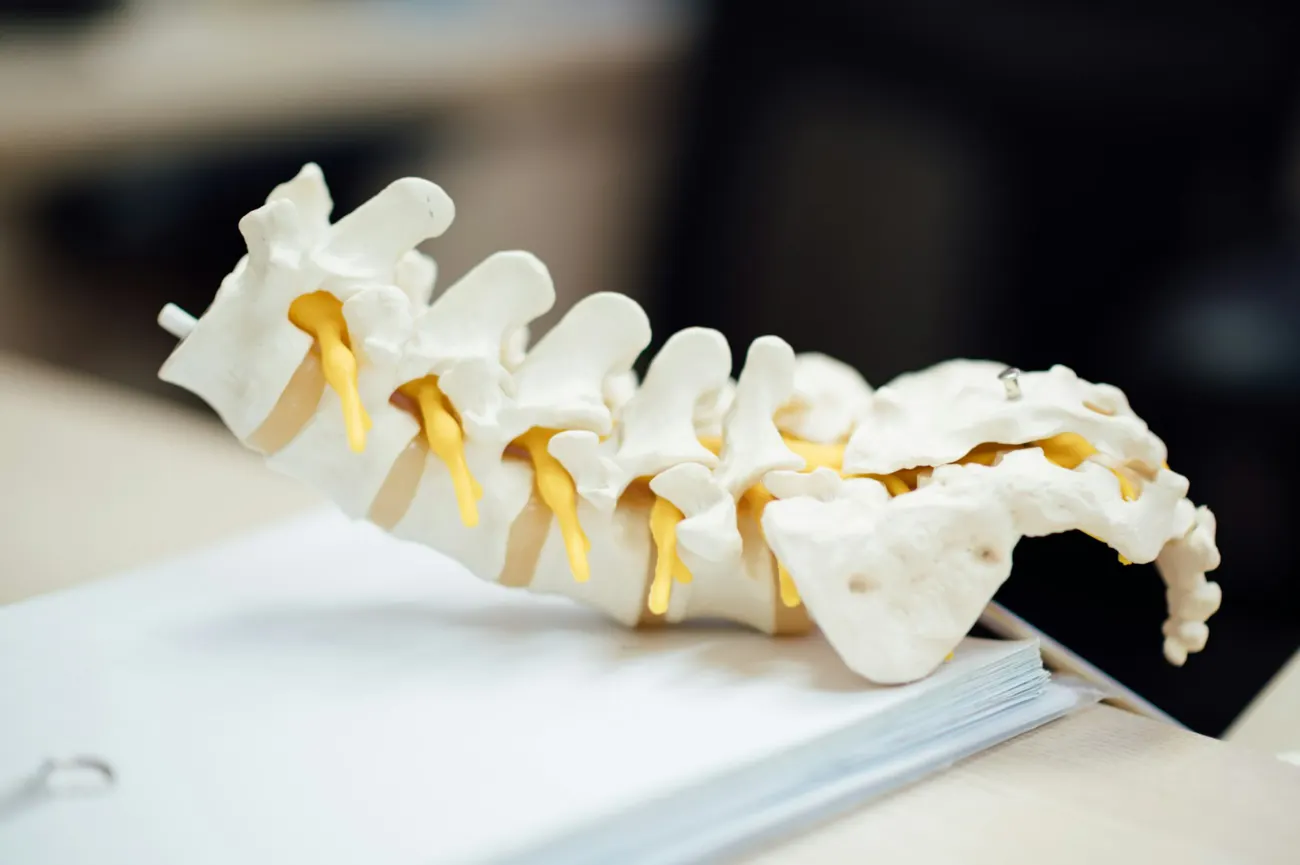
Bone densitometry (DXA / DEXA) is the standard method for measuring bone mineral density using a very low dose of X-rays and is used to assess osteoporosis (bone loss).
Measurements are usually taken at the lumbar spine and hip; the forearm may also be assessed when needed. The values obtained are compared with reference values.
Results are reported as a T-score and Z-score. These values help your doctor assess your bone health, decide on the need for treatment and monitor the response to treatment.
Important: DXA uses a very low dose of ionising radiation. Possible pregnancy and recent contrast examinations should be reported beforehand.
MEASUREMENT
Low dose.
Quick and painless.
Dual-energy X-ray absorptiometry
DXA
Assessment by T-score
T
Age comparison by Z-score
Z
During the examination you lie on your back on the table while the scanner arm passes over the measurement area. The procedure is painless and usually short.
Follow-up measurements should ideally be performed on the same device and at the same sites to keep results comparable.
WHO IS IT FOR?
Who should have
a bone density test?
The need for measurement is determined by age, risk factors and your doctor's assessment.
01 / MENOPAUSE
Postmenopausal women
Assessment on medical advice, as bone loss may accelerate after menopause.
02 / OLDER AGE
Older adults
Assessment of the risk of osteoporosis, which increases with age.
03 / MEDICATION
Long-term medication use
People taking medicines that can affect bone density, such as corticosteroids, for a long time.
04 / FRACTURE HISTORY
Low-energy fractures
Further assessment in people with a history of fractures from simple falls.
05 / RISK FACTORS
Family and hormonal risks
Family history of osteoporosis, hormonal disorders or low body weight.
06 / MONITORING
Treatment monitoring
Regular monitoring of treatment response in patients receiving osteoporosis treatment.
The frequency and need for measurement are determined by your doctor according to your personal risk.
PATIENT GUIDE
What to know
before your scan.
01 / BEFORE
Pause calcium supplements
You may be advised not to take calcium supplements in the 24 hours before the scan. Tell us if you have recently had a barium or contrast examination.
02 / ON THE DAY
Metal-free clothing
Metal parts such as zips, belt buckles and buttons can affect the measurement; wear comfortable, metal-free clothing.
03 / AFTERWARDS
Results and follow-up
You can return to daily life immediately after the scan. The report is prepared by a radiologist and reviewed with your doctor.
Pregnancy: If you are pregnant or think you may be, always inform the team before the scan.
FREQUENTLY ASKED QUESTIONS
Questions about
bone densitometry.
What does bone densitometry measure?
It measures bone mineral density and is used to assess osteoporosis and osteopenia.
What are the T-score and Z-score?
The T-score compares your result with a young adult reference; the Z-score compares it with people of the same age and sex.
Does bone densitometry involve radiation?
Yes, but the dose used is very low.
Is the scan painful?
No. The procedure is painless; you only need to lie still for a short time.
Do I need to fast for the scan?
No. Fasting is not required, but you may be advised not to take calcium supplements in the 24 hours before the scan.
How often should bone density be measured?
Frequency depends on your risk and treatment; your doctor will decide the follow-up interval.
CITYMED FULYA
A careful approach
to imaging.
Hakkı Yeten Cd.
Unimed Business Centre No:19, Floor B1
34394 Şişli / Istanbul, Türkiye
GET DIRECTIONS
How can we help you?
Choose a topic and your message will open ready to send on WhatsApp. We reply as soon as possible during working hours.