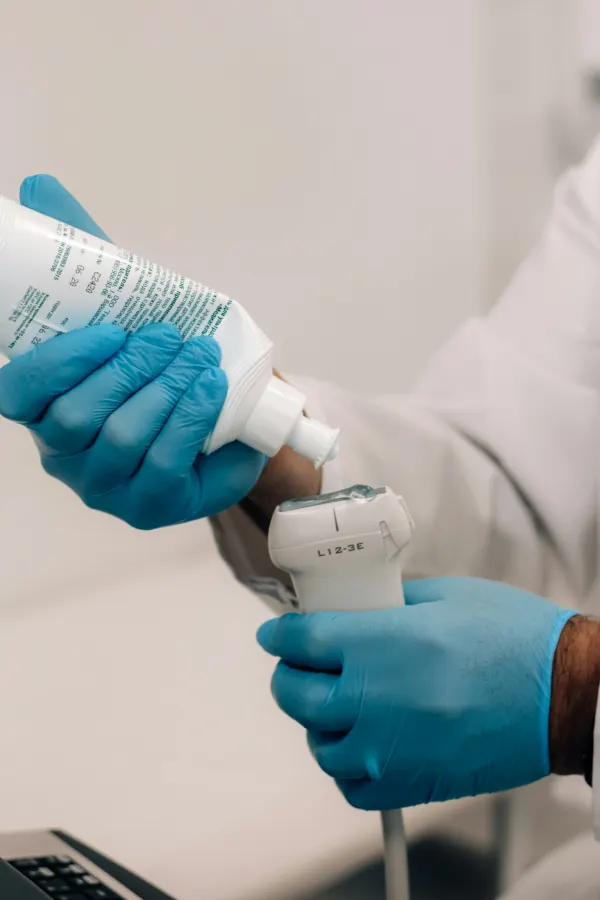
Interventional radiology covers diagnostic and therapeutic procedures in which ultrasound (US), computed tomography (CT), mammography and other imaging methods help plan a safe route to specific tissues.
At CityMed, procedures such as ultrasound-guided localisation and biopsy of breast masses, prostate biopsies and thyroid fine-needle aspiration biopsies are performed. For thyroid biopsies, sample adequacy can be assessed in suitable cases by a pathology team attending the centre.
Stereotactic breast biopsy and localisation for suspicious microcalcifications, CT-guided biopsy for suitable chest lesions and intra-articular contrast injection for MR arthrography in selected joint problems can also be performed.
Important: Which procedure is necessary and appropriate is determined by the doctor based on clinical history, previous imaging, medications and risk assessment. Not every procedure is suitable for every patient.
OUR APPROACH
A planned process.
Careful execution.
Real-time needle guidance
US
Planning for deep-seated lesions
CT
Intra-articular contrast for arthrography
MR
Before the procedure, the location of the target lesion and the surrounding vessels and organs are assessed. Local anaesthesia, sedation or anaesthetist support can be planned when needed. Samples are sent for pathological examination under appropriate conditions.
Vascular imaging performed for suspected occlusion, dilatation or rupture of large vessels can help produce the measurements and diagrams needed for stent or graft planning. Cases requiring treatment are referred to an appropriate interventional radiology team.
APPLICATIONS
Precise targeting.
Versatile applications.
The procedure is selected taking into account imaging findings, clinical need and patient safety.
01 / ULTRASOUND-GUIDED
Breast biopsy and localisation
Needle biopsy of masses visible on ultrasound in suitable cases, and pre-operative lesion localisation.
02 / ULTRASOUND-GUIDED
Thyroid biopsy
Fine-needle cell sampling of thyroid nodules; sample adequacy assessment with the pathology team where appropriate.
03 / ULTRASOUND-GUIDED
Prostate biopsy
Ultrasound-guided sampling of prostate tissue and pathological assessment according to clinical indication.
04 / MAMMOGRAPHY-GUIDED
Stereotactic breast biopsy
Image-guided sampling and localisation of microcalcifications or suspicious areas detected on mammography.
05 / CT-GUIDED
Chest biopsy
Tissue sampling of selected lung and chest lesions with the needle path planned on CT.
06 / MR ARTHROGRAPHY
Intra-articular contrast injection
Image-guided contrast injection for more detailed assessment of joint structures.
07 / VASCULAR IMAGING
Stent and graft planning
Measurement of vessel diameters, lesion length and anatomical relationships; referral to the relevant team where necessary.
08 / WHEN NEEDED
Anaesthesia support
Planning with an anaesthetist according to the nature of the procedure and the patient's needs.
PATIENT GUIDE
What to know
before your procedure.
01 / BEFORE YOUR VISIT
Share previous imaging
Bring your ultrasound, CT, MRI and mammography reports and any pathology results.
02 / MEDICATION
Report blood thinners
Tell us about aspirin, anticoagulants and other medicines. Do not stop any medication without medical advice.
03 / HEALTH INFORMATION
Allergies and medical history
Report bleeding disorders, infection, possible pregnancy, contrast allergy and other significant conditions.
04 / PREPARATION
Confirm fasting requirements
Fasting and preparation may vary depending on the biopsy, sedation or anaesthesia plan.
05 / DURING THE PROCEDURE
Local anaesthesia and monitoring
Local anaesthesia may be used depending on the procedure. Some procedures may require a short observation period or additional follow-up.
06 / AFTER THE PROCEDURE
Know the warning signs
Ask the team where to go if you experience pain, bleeding, fever or shortness of breath.
Aftercare, observation time and delivery of results may differ depending on the type of procedure. Personal medical instructions given to you take priority.
FREQUENTLY ASKED QUESTIONS
Common questions about
interventional radiology.
What is interventional radiology?
A medical field covering diagnostic sampling and some therapeutic procedures performed under the guidance of ultrasound, CT and similar imaging methods.
How is an ultrasound-guided biopsy performed?
The target tissue is visualised with ultrasound; a suitable route is chosen and a sample can be taken with a needle under local anaesthesia.
Is a thyroid biopsy painful?
There may be brief stinging or discomfort. The technique used and pain control are tailored to the patient.
When is a stereotactic breast biopsy preferred?
It can be used to sample microcalcifications or suspicious areas seen on mammography that are not clearly visible on ultrasound.
What are the risks of a CT-guided lung biopsy?
Complications such as bleeding and pneumothorax (collapsed lung) can occur. Risks are assessed by the doctor before the procedure.
Should blood thinners be stopped before a biopsy?
Some procedures may require medication adjustment; this should only be decided by the doctor planning the procedure and your treating doctor.
What is MR arthrography?
In selected joint problems, contrast is injected into the joint and the internal structures are then assessed with MRI.
When are biopsy results available?
The time depends on the sample type and the pathology laboratory's workflow; please ask the centre.
Do I need to fast for every procedure?
No. Fasting requirements differ according to sedation, anaesthesia and procedure type; confirm before your appointment.
Can procedures be performed under anaesthesia?
Anaesthetist support can be planned if medically necessary and conditions allow; it is not applied automatically for every patient.
CITYMED FULYA
A careful approach
to imaging.
Hakkı Yeten Cd.
Unimed Business Centre No:19, Floor B1
34394 Şişli / Istanbul, Türkiye
GET DIRECTIONS
How can we help you?
Choose a topic and your message will open ready to send on WhatsApp. We reply as soon as possible during working hours.