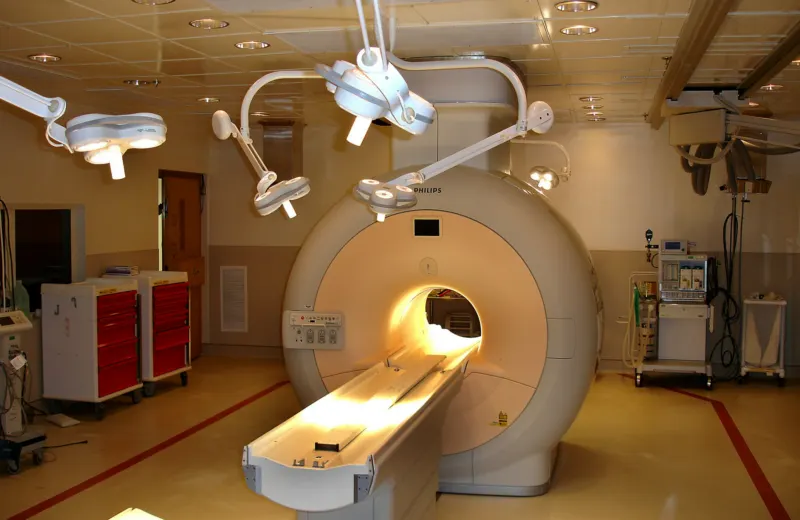
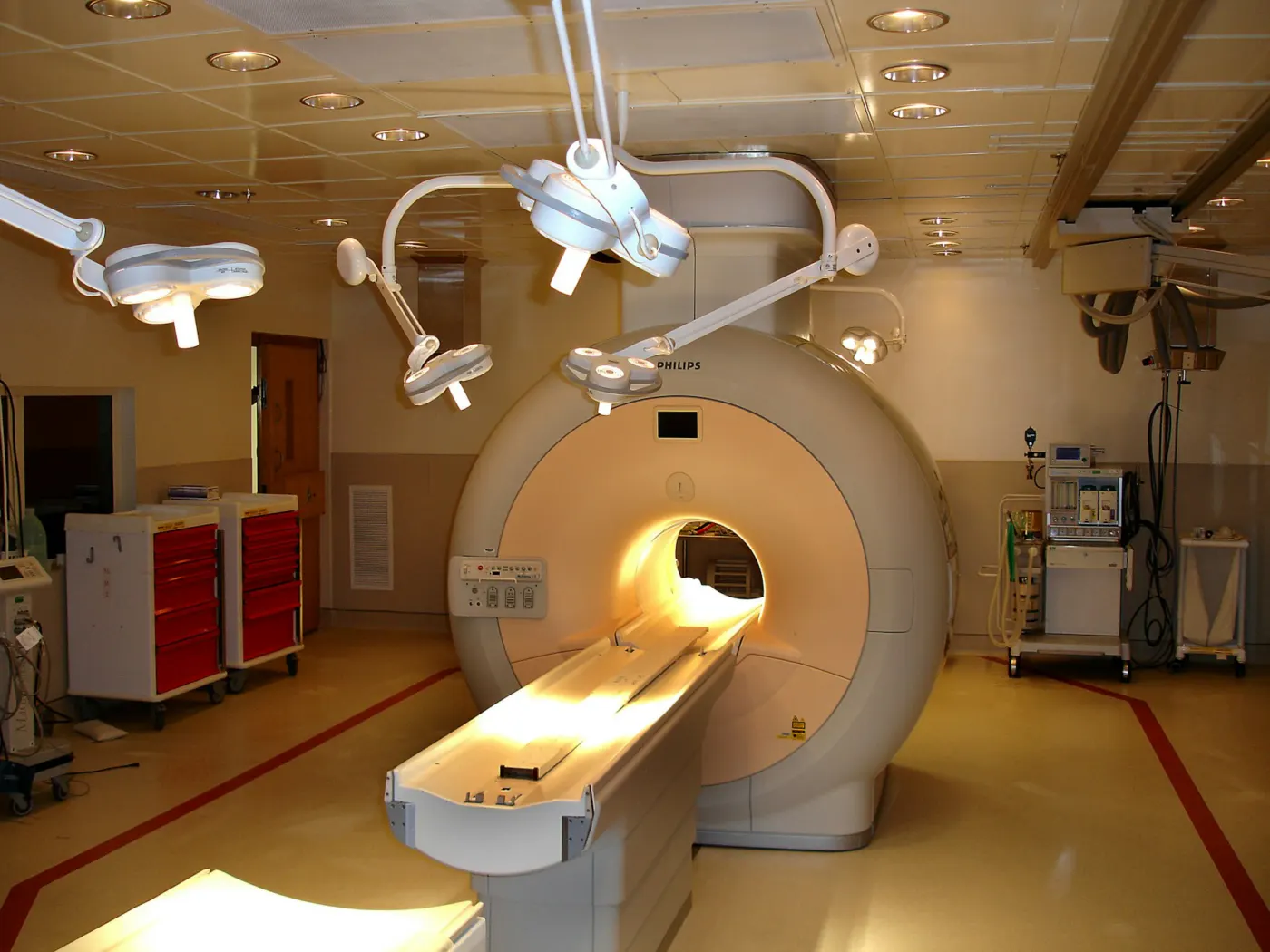
What is MRI?
Magnetic resonance imaging (MRI) is a medical imaging method that uses a strong magnetic field and radio waves to obtain detailed images of the body’s internal structures. MRI does not use ionising X-rays.
Which region is examined, how long the examination takes and whether contrast is needed depend on the clinical question and your doctor’s assessment.
How should you prepare for an MRI?
Preparation rules can vary according to the type of examination. Specific instructions given by the centre always take priority.
- Tell us in advance about a pacemaker, cochlear implant, neurostimulator, vascular clip or any metal fragments in your body.
- Share details of previous operations and implanted medical devices; bring your device card if you have one.
- Tell the healthcare team about possible pregnancy, kidney disease, drug allergies and any previous reaction to contrast.
- Leave jewellery, watches, phones, cards and removable metal items behind before entering the scanning area.
- Bring previous MRI, CT and ultrasound images and reports for comparison.
Important: MRI compatibility is not the same for every implant. You should not enter the MRI area until the device’s safety, model and scanning conditions have been verified by the specialist team.
What happens during the scan?
You lie on the MRI table and equipment suited to the region being imaged is positioned. You will be asked to stay as still as possible throughout the scan for good image quality. The scanner makes loud, rhythmic noises; suitable hearing protection is provided.
Scan time varies with the region and protocol. In some examinations, contrast may be given through a vein. If you have claustrophobia or difficulty staying still, it is helpful to let us know before your appointment.
Is contrast MRI used for every patient?
No. Contrast is not required for every MRI examination. The decision takes into account clinical need, previous imaging findings, kidney function and relevant safety assessments. Whether contrast is needed is determined individually.
After the MRI scan
After most standard MRI examinations that do not involve contrast or sedation, you can return to your daily life. If contrast or sedation was used, follow the specific instructions given by the centre. The images are reviewed and reported by a radiologist.
For more detailed information about MRI and its applications, see our article What Is a 1.5 Tesla MRI Scan? and our MRI service page.
Frequently asked questions
Does an MRI scan involve radiation?
MRI does not use ionising radiation like X-rays; it creates images with a magnetic field and radio waves.
Do I need to fast before an MRI?
Not every MRI requires fasting. Special preparation may be requested for some examinations such as abdominal MRI, or when sedation is planned.
Can no one with a metal implant have an MRI?
No. Some implants may be MRI-compatible under certain conditions. The safety decision is based on the device's technical information and scanning conditions.
Why is it important not to move during an MRI?
Movement can blur the images and may require some sequences to be repeated.
How long does an MRI take?
It depends on the region and protocol. You can ask the centre about your expected scan time when booking.
This article has been prepared for general information purposes. For personal medical assessment and examination preparation, follow the instructions of your doctor and the imaging centre.